
ADHD traits test — an adaptive conversation, not a checklist.
No signup to start · Descriptive, not diagnostic
- Adapts as you answer
- Maps ADHD + autism traits
- About 10 minutes
- Honest, balanced results
What we explore together
Eight chapters of a fast-running mind
The conversation walks through where ADHD-pattern traits actually show up — not textbook language, but the real texture of days that run on interest instead of intention.
Where attention goes
Interest-driven focus: effortless on the fascinating, impossible on the boring-but-important — and the drift that happens mid-page, mid-task, mid-sentence.
Plans, time & things
The wall between knowing and starting, time that reports late or never, keys in the fourth place you look, and projects that live perfectly planned in your head.
Impulse & motion
Blurting from enthusiasm, deciding fast, the motor that idles high — fidgeting, pacing, and the genuine effort of sitting still.
The deep end
Deep, locked-in focus: hours vanishing into the engaging thing, meals missed, and the sting of being interrupted mid-flow.
Senses & attention
The crucial mechanics: is the problem that input overwhelms you, or that every new sound owns your attention — or that silence itself is unbearable?
Big feelings & criticism
The outsized wave a small comment can set off, replaying conversations for days, and emotions that arrive at full volume.

How it works
Built for minds that hate questionnaires
Forty identical checkboxes is exactly the kind of task this test is about. So it isn't one. The guide keeps the pace up, adapts to your answers, and never asks a question your previous answers already covered.
- 1
Context first
Who this is about, their age range, the shape of the days — so questions about work, study, or school land correctly from the start.
- 2
Signal, then depth
Strong pattern in your answers? The guide follows up right there. Nothing showing? It moves on. No two paths through the conversation are the same.
- 3
Your words, where they count
A few times, the guide will ask you to describe something real — your actual relationship with being on time, not the multiple-choice version.
Two patterns, often confused
ADHD traits vs autism traits — commonly confused, meaningfully different
Distractibility, social exhaustion, intense focus, sensory trouble: both trait patterns produce all four, which is why so many people spend years looking at the wrong one. The difference is the mechanism underneath — and this conversation is built to tell the mechanisms apart.
Autism-pattern traits run on intensity and predictability
- Specific stimuli genuinely overwhelm — textures, flicker, noise that others tune out arrives at full force.
- Unpredictability is the aversive state: surprise plan changes and unchosen intensity, not boredom.
- Input-seeking is about regulation — repetition, pressure, sameness that settles the system.
- Social effort is often masking: a rehearsed performance with a real energy bill afterwards.
ADHD-pattern traits run on attention and stimulation
- Sound and movement don't hurt — they hijack. Attention snaps to every new input, and the conversation thread is gone.
- The aversive state is under-stimulation: slow days, waiting rooms, and monotony feel physically unbearable.
- Input-seeking is about novelty — new places, new projects, something happening.
- When they're locked deep into something, sensory input simply doesn't land: their name, the doorbell, the burning toast.
The two patterns co-occur in a lot of people. That's why this conversation quietly measures both — if your answers lean toward the autism-pattern side, or clearly carry both, your results will tell you straight rather than squeezing everything into one story.
At the end
An honest map of how your mind runs
No single number pretending to sum you up. Your results walk through every trait that showed up — the genuine advantages it gives you, and the specific places it costs you — in plain language.
- Two signal meters — ADHD-pattern and autism-pattern trait strength, each with an honest confidence read
- How the two patterns relate in your answers: one lean, a blend, or both
- Your sensory style: attention-driven, intensity-driven, or mixed
- 18 trait facets, each with where it shines and where it grinds
- The strengths cluster — what this exact wiring does better than the default
- A closing note from your guide, written from your actual answers
The conversation is open to everyone — full results unlock for $2.99, one time, with a 30-day money-back guarantee.
Start the test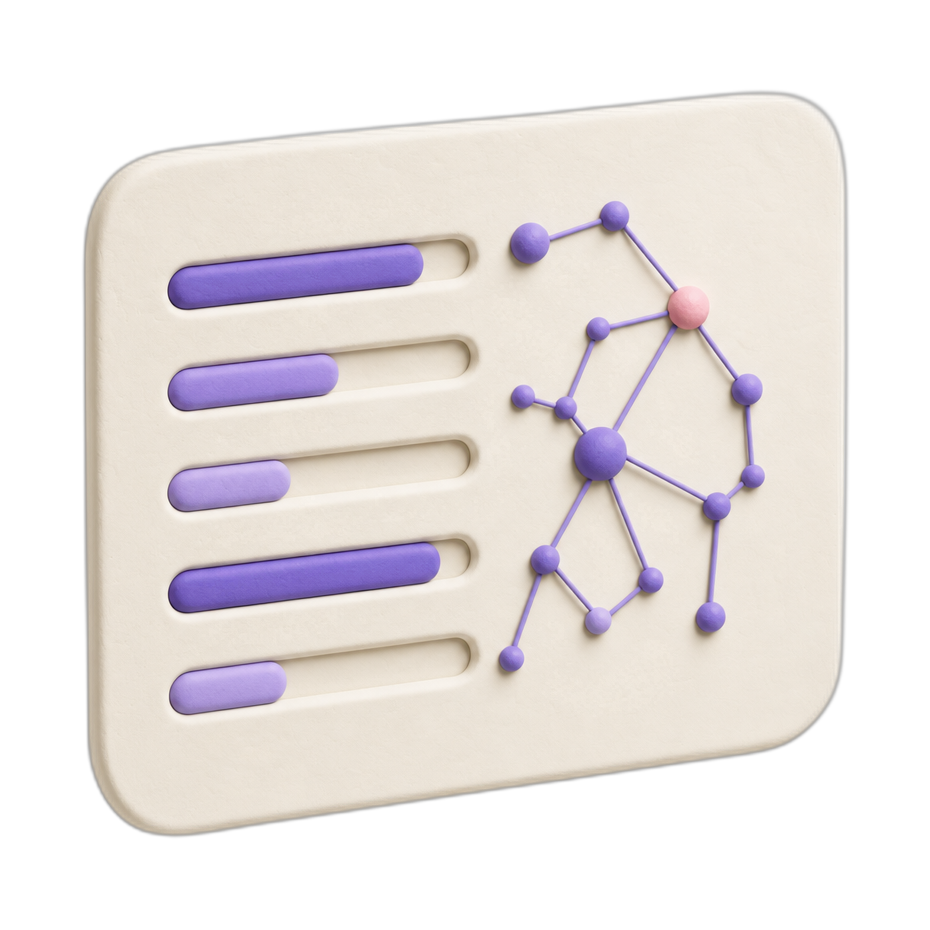
Questions people ask
Before you start
Is this a real ADHD test?
It's a serious, adaptive traits conversation — but not a clinical assessment, and not a diagnosis. It describes the trait patterns in your answers for self-knowledge. If it resonates, a licensed clinician is the right next step — and your trait map is a useful, concrete thing to bring along.
How long does it take? I have a complicated relationship with long forms.
About 10 minutes, and it's built to feel nothing like a form: one question at a time, real follow-ups, no padding. Paths run 28–38 questions depending on what your answers show.
Why does an ADHD test ask about routines and social stuff?
Because ADHD-pattern and autism-pattern traits overlap heavily and get mistaken for each other constantly. This conversation measures both, so if your answers actually lean the other way — or carry both patterns — your results say so honestly.
Can I take it about my partner or someone else?
Yes — say so at the start and every question switches to observable behaviour, with an explicit 'I'm not sure' option for the internal stuff. The results account for the outside view in their confidence read.
What about my child?
There's a dedicated parent version — same engine, every question reframed to what you actually see at home, school, and play. See the ADHD test for kids.
What do the results cost?
Taking the conversation is open to everyone. The full results unlock with a single small payment — no subscription required — with a 30-day money-back guarantee. Exact pricing shows on the results page in your local currency.
Is my data private?
Your answers are stored securely, never sold, and used only to build your results. Written answers are processed to interpret your traits and nothing else.
The autism traits and ADHD traits conversations describe trait patterns for self-knowledge and entertainment purposes. They are reflective screening-style experiences, not clinical instruments — results are not a diagnosis and cannot tell you, or your child, whether any condition is present. Many of these traits overlap across neurotypes and with everyday personality variation. If your results resonate, a licensed clinician (psychologist, psychiatrist, or developmental paediatrician) is the right next step for a formal assessment.